
Tourists find you on Booking, but you pay a 15-25% commission on every reservation for that. The answer isn't to disappear from the aggregators — it's to turn your own site into the channel where guests land, book directly and come back. A fast site, with a booking engine and multilingual pages, moves the margin back to you.
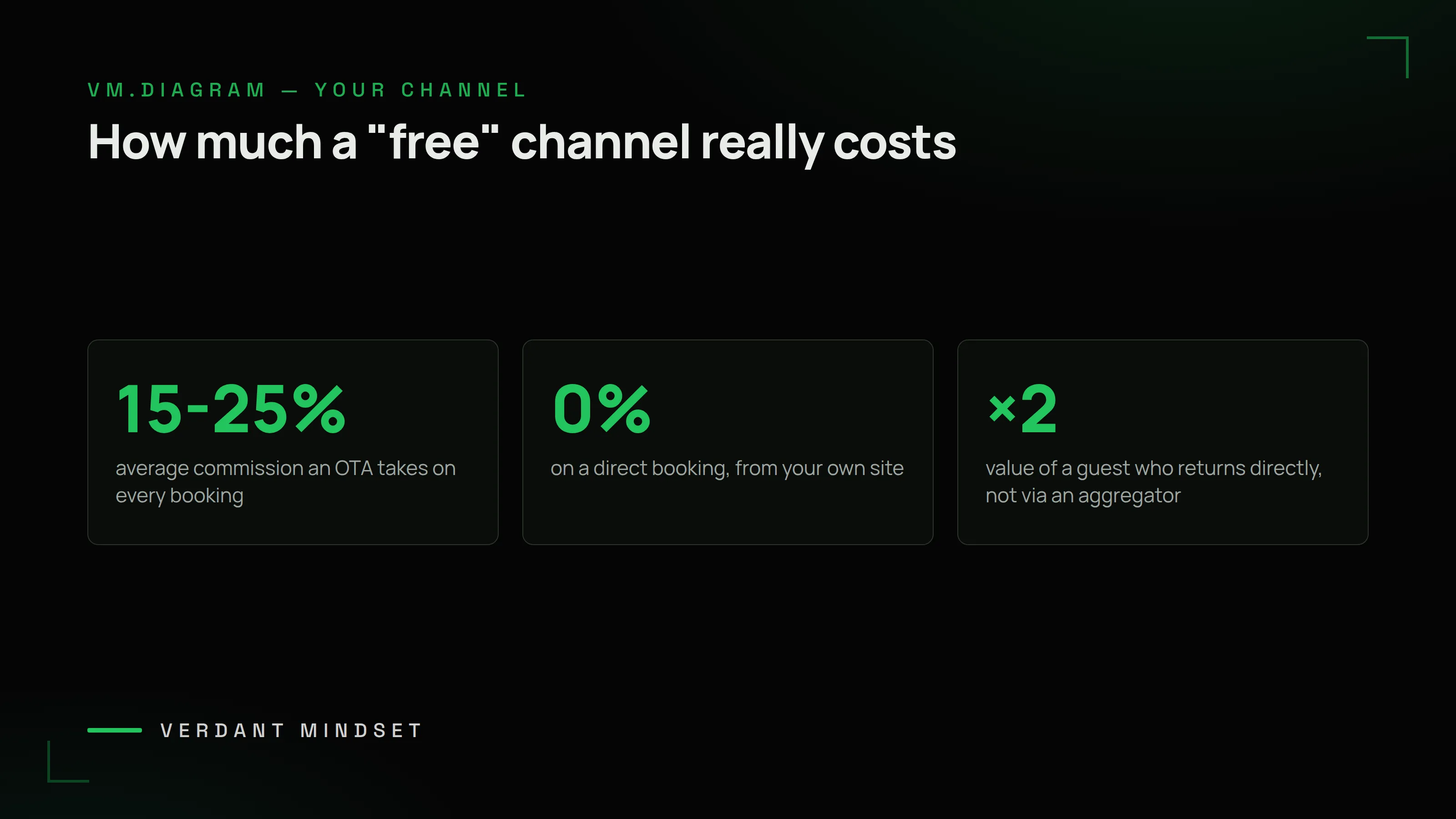
The truth about the "free" channel
Booking and Expedia look free because you pay nothing upfront. But 15-25% of the money leaves on every reservation. For a guesthouse doing €40,000 a year through aggregators, an 18% commission means €7,200 a year handed to someone else — enough to pay several times over for a site you actually own.
The problem isn't that you use OTAs. It's that you have no channel of your own alongside them, so you pay commission even on the guests who would have chosen you anyway.
Don't "leave Booking". Use it as a billboard.
Aggregators are excellent at one thing: discovery. A tourist who doesn't know you finds you there — that's valuable. The mistake is stopping there, where you pay commission for life.
The right play is simple: let the OTA discover you, but build a site so good that the second booking, and every one after, comes straight to you, at 0% commission. Booking becomes the acquisition cost of the first stay, not a permanent tax.
What your site needs so the tourist presses "Book"
A pretty site that only looks good won't bring bookings. You need five things:
- Mobile speed. Tourists search for accommodation on their phone, often on the move. A slow site loses them in seconds.
- A direct booking engine on the site. No "call for availability". The guest sees the calendar, chooses, pays — on your infrastructure, not rented.
- Pages that convince, not just inform. Real photos, reviews, a clear "Book" button. This is where the decision is won or lost — conversion engineering, not decoration.
- Real multilingual. If you get guests from Germany or Hungary, they search in their language. A correct EN/DE version shows up where the competition is invisible.
- Be found on Google. A site is useless if it doesn't appear when someone searches for accommodation nearby — that's local SEO, whether you're in Sibiu or the Hațeg Country.
Bring guests back — automatically
The cheapest off-season guest is the one who has already stayed with you. With simple automations — a thank-you email after the stay, a discount valid only on direct booking, a reminder before the season — you gradually move loyal clients to your own channel, at 0% commission. You don't need a marketing team; you need a system that runs itself.
See how much you're really losing
We don't sell estimates. We run an engineering audit where we measure concretely: how much you pay monthly in commissions, how fast your site is on mobile, and what stands between you and direct bookings — with numbers from your own site, not promises.
FAQ.PROTOCOL
Frequently Asked Questions
Let's build something remarkable.
30-min discovery call — no cost, no pitch. We audit your digital architecture and deliver a clear operational plan.
- 01Short message with your business context
- 02Reply within 24h with a discovery-call proposal
- 03Operational plan + scope recommendation