
A good winery can sell directly to consumers and for export, keeping the margin for itself instead of the distributor. You need an online store built for wine: compliant with alcohol-sale rules, with shipping, a multilingual version for export and a brand story that justifies the price. The distributor stays an option, not the only path to the customer.
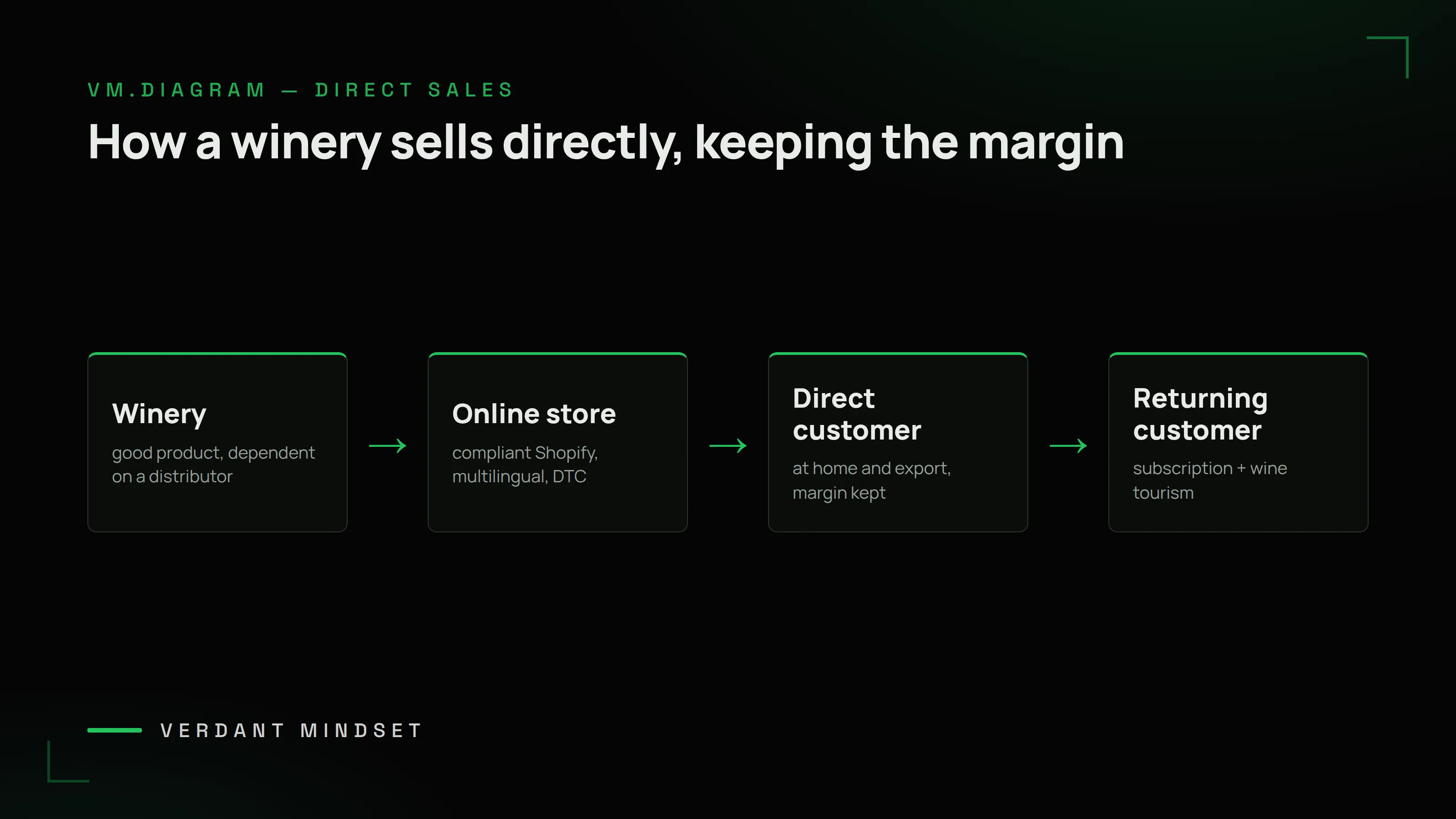
Why direct sales change a winery's economics
When you sell through a distributor or retailer, a big part of the price leaves your margin. Direct-to-consumer (DTC) sales and export on your own terms keep that margin — plus the direct relationship with the customer, which no one can take from you. It doesn't mean dropping distributors; it means not depending 100% on them, through an online store you own. For a wine region like Jidvei, the direct channel is the difference between being a supplier and being a brand.
What a wine online store needs
Wine doesn't sell like any other product — the store has a few specific requirements:
- Compliance. Selling alcohol has rules (excise, packaging/deposit schemes, age verification, transport). We don't invent figures here — we map them exactly to your case at an audit, so you start correctly from the first step.
- Multilingual for export. If you target Germany, Austria or other markets, you need a correct version in their language and visibility in search and AI (SEO/AEO) in those markets.
- Brand story and wine tourism. Wine sells with a story. Pages for tastings, visits and subscriptions, optimized for conversion, turn a visitor into a returning customer.
Orders and shipping, without manual work
As direct orders grow, the admin work can overwhelm you. With automation — confirmations, shipping documents, stock sync, subscription reminders — the store runs in the background, and you focus on the wine, not on spreadsheets.
Start on the right foundation
A badly built wine store costs you more than one done right. Start with an engineering audit: we tell you exactly what you need for DTC and export, which rules apply in your case and what a store that actually sells looks like — with real numbers, not promises.
FAQ.PROTOCOL
Frequently Asked Questions
Let's build something remarkable.
30-min discovery call — no cost, no pitch. We audit your digital architecture and deliver a clear operational plan.
- 01Short message with your business context
- 02Reply within 24h with a discovery-call proposal
- 03Operational plan + scope recommendation